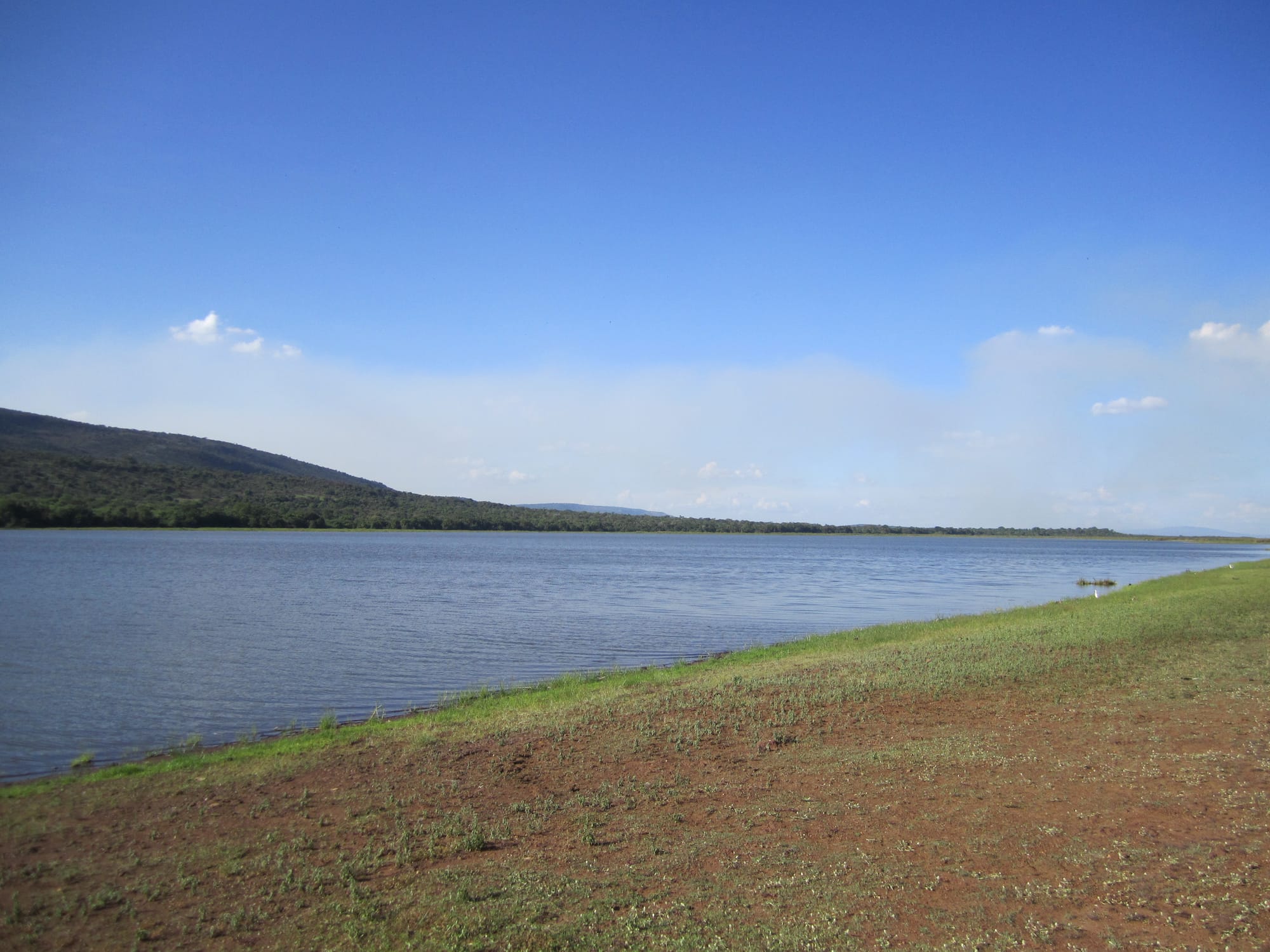
Akagera records somewhere close to 490 bird species inside a park of just over a thousand square kilometres — an extraordinary figure that comes down to habitat variety. In a single morning you can move from papyrus swamp to open lake, then through acacia woodland, thicket and montane grassland, each with its own set of species.
The star, inevitably, is the shoebill: a metre-tall grey bird with a bill like a wooden clog that stalks the papyrus for lungfish. Akagera is one of the very few places in Rwanda where it occurs, and finding one is a matter of quiet boats, sharp eyes and luck.
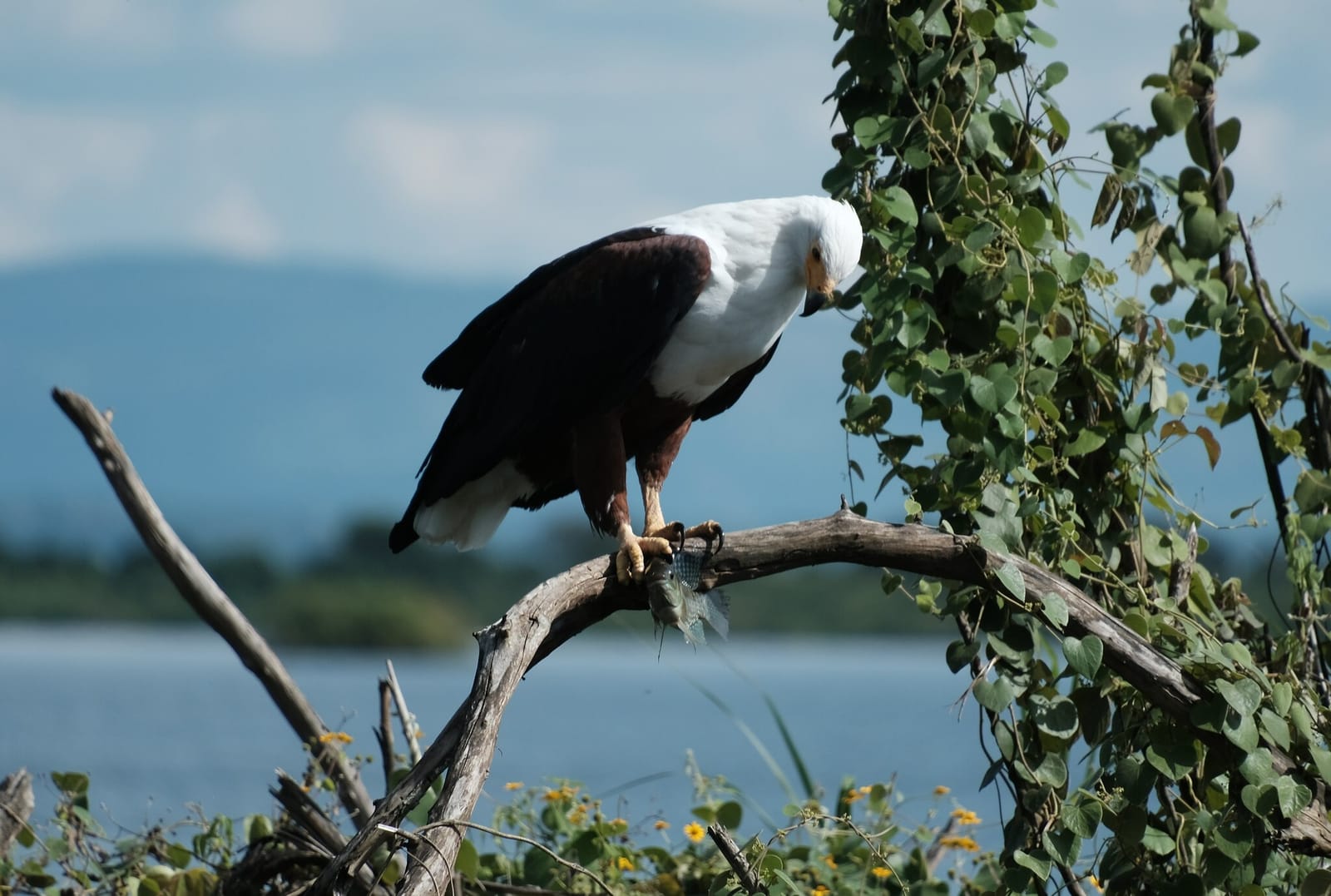
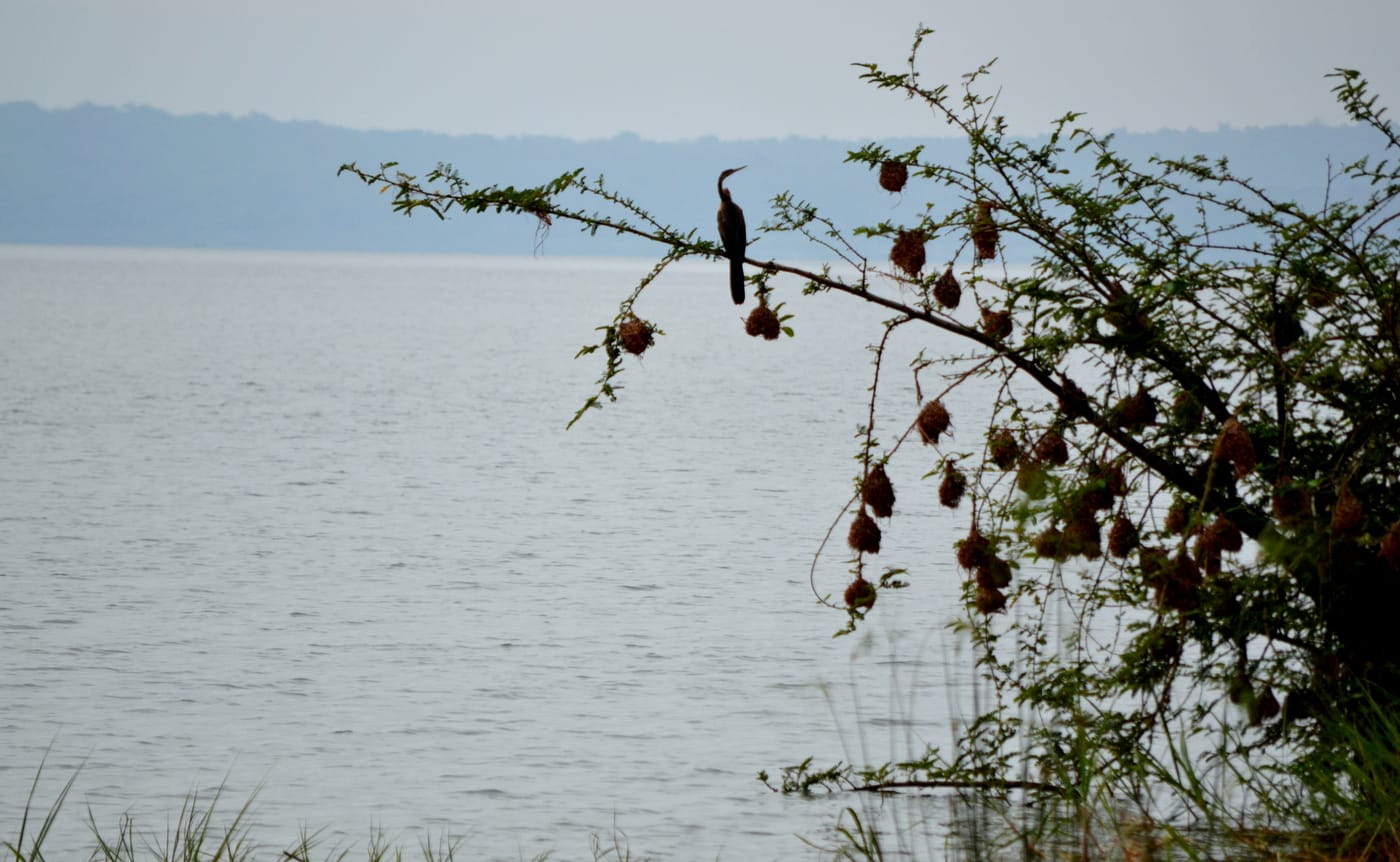
Beyond the shoebill, the wetlands deliver papyrus gonolek, white-winged swamp warbler, African darter, goliath heron, saddle-billed stork, open-billed stork and huge numbers of African fish eagles. The acacia woodland behind adds the near-endemic red-faced barbet, and the grasslands hold grey crowned cranes — Rwanda’s national bird, and a species that has recovered strongly here.
Top things to do at The Papyrus Wetlands
Take a dedicated birding boat at dawn
A private early boat on Ihema, moving slowly along the papyrus edge, is far and away the most productive birding you can do in the park.
Search the papyrus for shoebill
Be realistic — many visitors never see one. Go early, go quietly, take a guide who knows the recent sightings, and treat it as a bonus rather than a plan.
Work the acacia woodland for red-faced barbet
This near-endemic is one of the main reasons East African birders come to Akagera at all. The woodland around the southern lakes is the place to look.
Watch grey crowned cranes on the plains
Rwanda’s national bird is regularly seen in pairs and small groups on the open grassland and marsh edges — an elegant, golden-crested species that has rebounded in protected areas.
How to get to The Papyrus Wetlands
- The best wetland birding is from the water: book a boat on Lake Ihema, ideally a private early-morning charter.
- Roadside birding along the southern lake circuit is excellent and needs no extra permit beyond park entry.
- Specialist birding operators run multi-day Akagera itineraries — worth it if a target list matters to you.
- Bring your own binoculars; vehicles rarely carry enough pairs for everyone.
- The migrant season from November to April adds Palearctic and intra-African species to the resident list.
- "Birds of East Africa" (Stevenson & Fanshawe) is the standard field guide for the region.
- Ask your guide about recent shoebill sightings when you arrive — the birds move, and yesterday’s location is worth knowing.
Best safaris for The Papyrus Wetlands
These top-rated experiences are the easiest way to see The Papyrus Wetlands and the surrounding park:
 Photography safari from $420
 Akagera Wildlife Photography Safari: Big Five & Boat Cruise
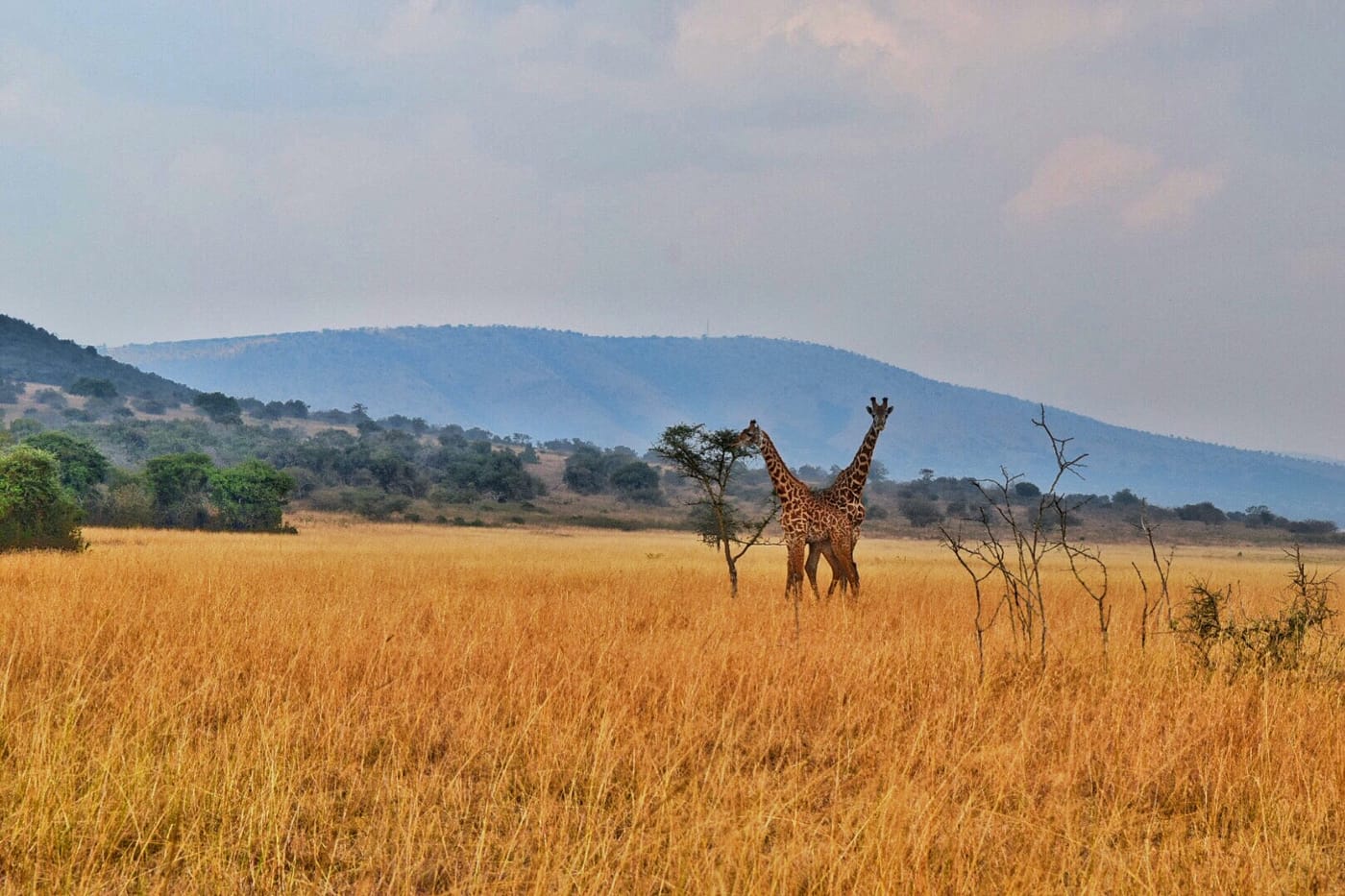
A standard safari gets you to the animals; a photography safari gets you to the animals with the sun in the right place and enough time to work the scene. This trip combines a Big Five game drive with a Lake Ihema boat cruise — the best low-angle wildlife photography in the park — and is structured around the golden hours. Bring your longest lens and a beanbag or clamp for the vehicle.
- Itinerary built around light, not just sightings
- Big Five game drive plus a Lake Ihema boat cruise
- Time to wait at sightings rather than move on
Best for: Photographers, birders, anyone tired of five-minute sightings
from US$420 per person
 Day safari + boat from $259
 Akagera 1-Day Safari with Boat Cruise & Park Fees Included
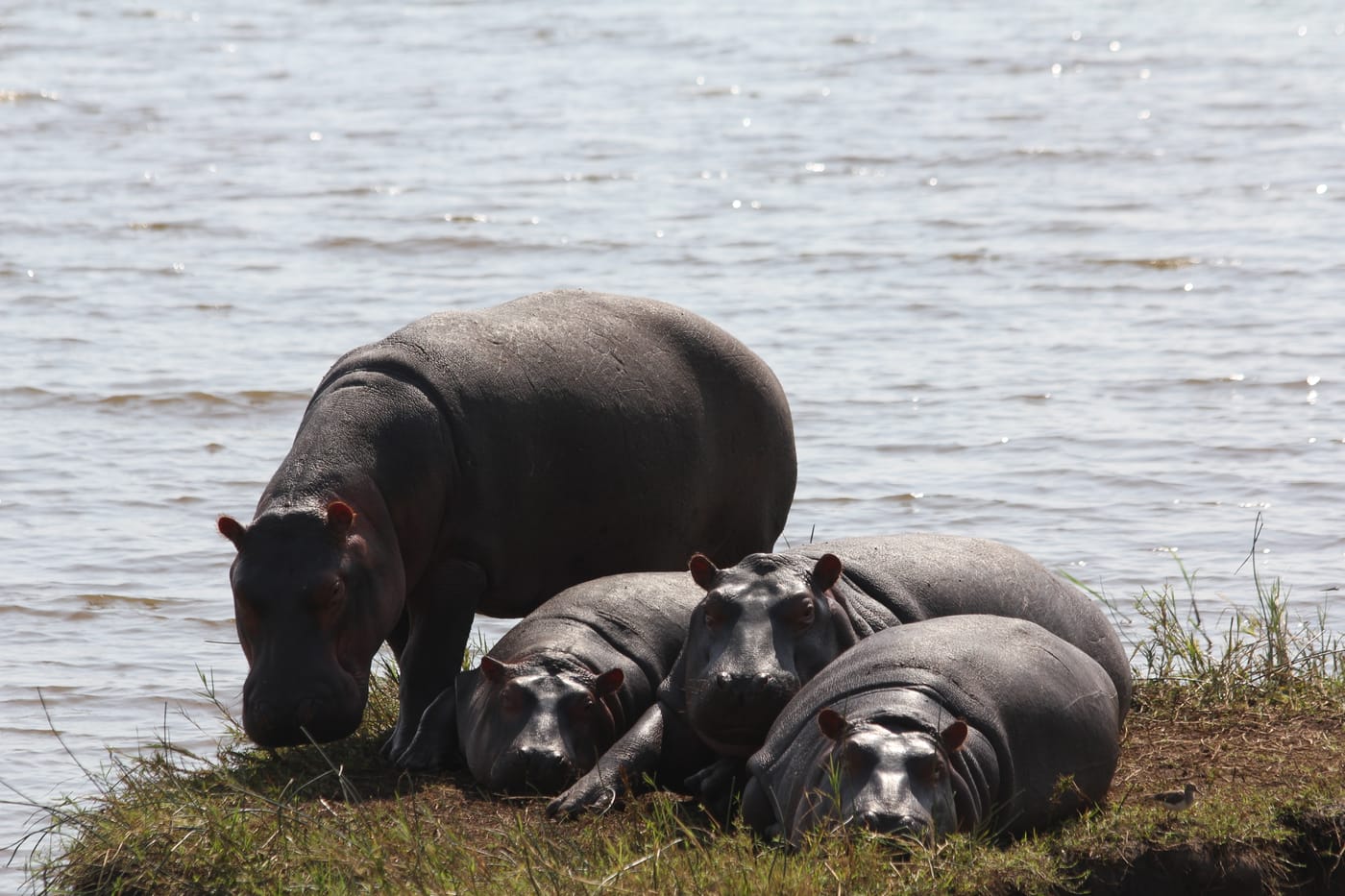
Akagera’s park fees are significant and many day tours quote them separately, so a package that bundles entry, a game drive and the Lake Ihema boat safari into one price is genuinely useful. This one does exactly that. You get the classic southern-sector drive plus an hour on the water among the hippo pods, with nothing left to pay at the gate.
- Park entry fees included — no surprise costs at the gate
- Game drive plus a Lake Ihema boat safari in one day
- Hippos, Nile crocodiles and superb waterbird viewing
Best for: Anyone who wants one all-in price with the boat included
from US$259 per person
 Multi-day safari from $850
 From Kigali: 2-Day Akagera Safari with Lake Ihema Boat Cruise
A two-day itinerary that gives equal weight to the land and the water. You cruise Lake Ihema for hippos, crocodiles and fish eagles, game drive through the savannah for the Big Five, and get a proper explanation of how a park that lost its lions in the 1990s became a fenced Big Five reserve again — which is, arguably, the most interesting thing about Akagera.
- Boat cruise on Lake Ihema among hippos and crocodiles
- Game drives across the southern and northern sectors
- Briefing on Akagera’s conservation and reintroduction story
Best for: Curious travellers, conservation-minded visitors, birders
from US$850 per person